TL;DR - Choosing a wedding pianist is one of those decisions that shapes the entire feel of your ceremony. This guide walks you through what to look for, what to ask, and how to tell the difference between someone who plays piano and someone who knows how to carry a wedding from start to finish.
Introduction
Your wedding day has a soundtrack. Whether you plan it carefully or leave it to chance, there will be music playing when your guests arrive, when you walk down the aisle, and when you leave as a married couple.
That is why choosing the right pianist matters more than most couples expect.
Here in the Tampa Bay area, you have plenty of options. Clearwater Beach ceremonies, garden weddings in St. Petersburg, chapel services in Largo, waterfront venues across Sarasota. Each setting has its own feel, and the right pianist knows how to match it.
This guide is built from over 25 years of performing at weddings across this region. It covers what to look for, what questions to ask, and how to feel confident in your choice.
The Real Problem Most Couples Face
Most couples have never hired a musician before. That is completely normal.
The challenge is that it is hard to evaluate something you have never shopped for. You might not know what separates an experienced wedding pianist from someone who simply plays piano well. You might not realize how much the music affects the pacing and emotion of your ceremony until the day itself.
The worry underneath all of that is simple. You do not want to get it wrong on a day that matters this much.
That concern is valid. And it is exactly why a little guidance goes a long way.
What Makes a Wedding Pianist Different from a Regular Pianist
Playing piano and playing a wedding are two very different things.
A wedding pianist needs to read the room in real time. They watch for the cue when the bridal party starts walking. They stretch a song when the flower girl takes her time. They transition smoothly between the processional and the moment the officiant begins speaking.
None of that is written in sheet music. It comes from experience.
A pianist who has performed at hundreds of ceremonies knows how to handle the unexpected. A late start, a change in the lineup, a gust of wind at a beach ceremony. These things happen, and the music should never skip a beat.
What to Look for When Choosing a Pianist
Wedding-Specific Experience
Ask how many weddings they have performed at and how many years they have been doing it. Someone with deep wedding experience understands the flow of a ceremony in a way that a studio musician or recital performer may not.
A Repertoire That Fits Your Style
Your ceremony music should feel like you. Some couples want classical pieces like Pachelbel's Canon in D. Others want a favorite song reimagined on piano.
A good wedding pianist offers a wide range and is honest about what translates well to the instrument. Ask to see their repertoire list. If you have a special song in mind, ask if they are willing to learn it and whether that is included in their fee.
Professional Equipment
Not every venue has a piano. Even when one is available, it may not be tuned or positioned well.
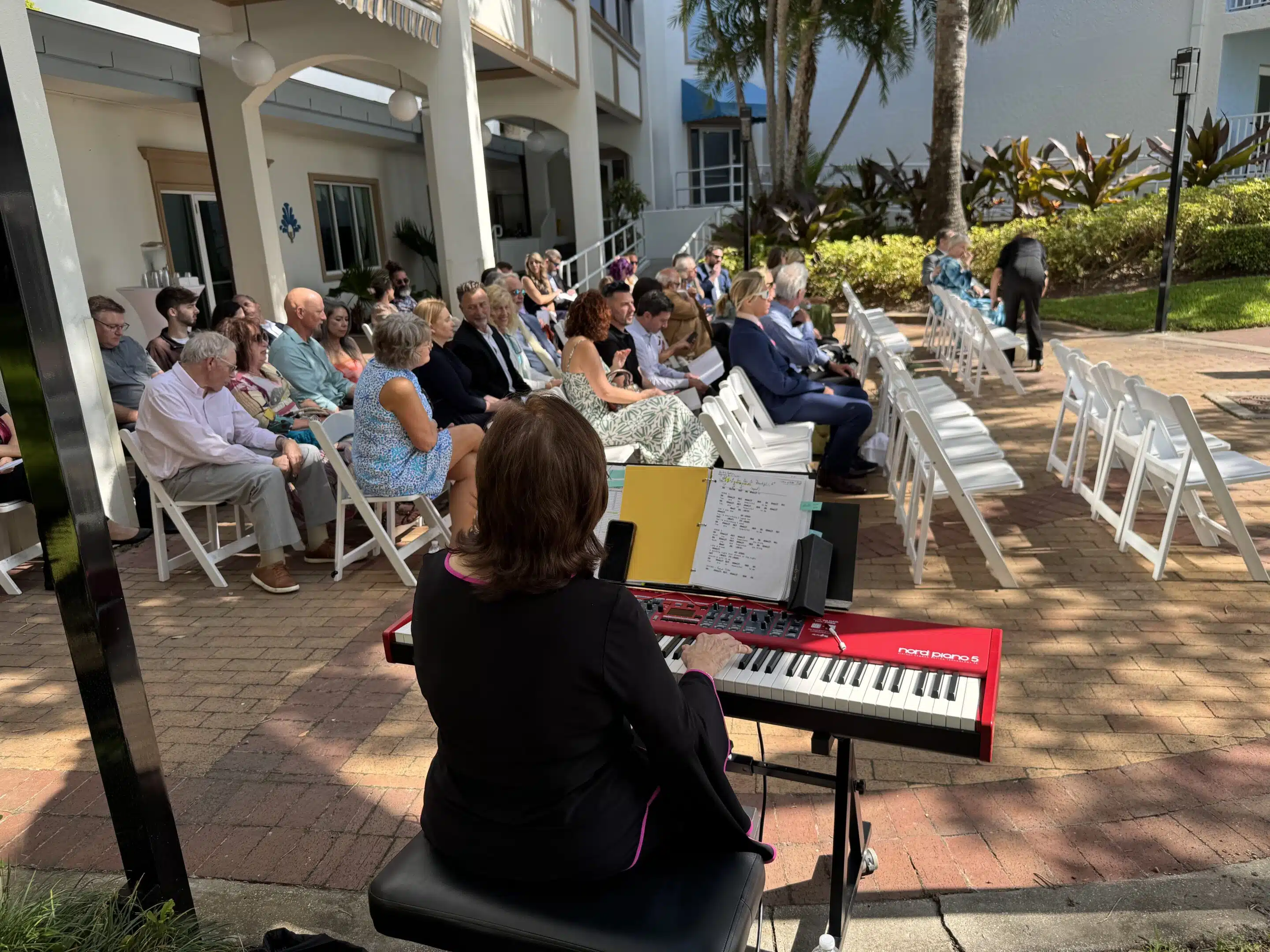
A professional wedding pianist brings their own high-quality digital keyboard with fully weighted keys. The sound should be rich and full, close to what you would hear from a grand piano.
For outdoor weddings in Tampa Bay, this is especially important. Ask about their setup for open-air venues. Heat, wind, and sun all factor in, and an experienced pianist will already have a plan.
Strong Communication and Coordination
Your pianist works alongside your officiant, your planner or coordinator, and sometimes a DJ or other musicians. They need to be organized, responsive, and easy to work with.
The best wedding pianists walk you through the ceremony timeline during the planning process. They help you understand where each musical moment falls and make sure everyone is aligned before the day arrives.
A Consultation That Puts You First
A good pianist will want to hear your story before talking about song lists. They will ask about the feel you are going for, the setting, and what matters most to you.
If someone jumps straight to a contract without learning about your day, that tells you something. The right fit is someone who listens first and guides second.
Questions to Ask Before You Book
Here are the most useful questions to bring into your conversations with potential pianists.
- How many weddings have you performed at?
- Can I see your full repertoire list?
- Will you learn a special song for us, and is that included?
- What equipment do you bring to the venue?
- Have you played at our specific venue before?
- How do you handle timing and coordination during the ceremony?
- What happens if something unexpected comes up?
- What is included in your fee, and what costs extra?
- Can I hear or watch samples of your playing?
- Do you offer a consultation before we commit?
These questions help you move past surface impressions and understand how a pianist actually works on the day that matters most.
What to Know About Pricing
Pricing for a wedding pianist in the Tampa Bay area depends on the scope of what you need. A ceremony-only booking is different from full coverage that includes cocktail hour and dinner music.
You can explore current wedding music packages and pricing here.
One thing worth knowing: the least expensive option is not always the best value. What you are really paying for is peace of mind. You want someone who shows up early, handles the details, and lets you focus on your day.
When to Start Looking
If your wedding falls during Tampa Bay's peak season, October through May, start reaching out six to twelve months in advance. The best dates go quickly, and earlier booking gives you more time to plan your music together.
Even if your wedding is further out, it is never too early to start the conversation. More time means more room to personalize every detail.
Expert Insight: Why the Music Matters More Than You Think
After 25 years of performing at weddings across the Tampa Bay area, one thing stands out above everything else. Couples almost never remember exactly what the officiant said. But they remember how the music made them feel.
The right music turns a ceremony into a moment. It holds the room together. It gives weight to the silence before the vows and joy to the walk back up the aisle.
That is not something a playlist can do. It takes a real person, reading the room, feeling the moment, and playing with intention.
Choosing a wedding pianist comes down to three things. Experience with weddings specifically. A genuine desire to understand your vision. And the professionalism to handle anything the day throws at them.
Take your time. Ask real questions. Trust your instincts about who makes you feel heard and cared for.
Your ceremony deserves music that feels as personal as the vows you are about to share.
Ready to Talk About Your Day?
If you are planning a wedding in the Tampa Bay area and want to explore what live piano music could look like for your ceremony, reach out to schedule a complimentary consultation. Let's talk about your vision and see if we are the right fit.
You can also learn more about Melody's background and experience here or visit the Music By Melody homepage to hear samples and explore services.
Key Takeaways
- Book your wedding pianist 6 to 12 months ahead, especially for peak season dates in Tampa Bay
- Wedding experience matters more than general piano skill when it comes to live ceremonies
- Ask to see a full repertoire list and find out if custom song requests are included
- Make sure your pianist brings professional portable equipment, especially for outdoor venues
- Strong communication and coordination skills are just as important as musical talent
- A real consultation should focus on your story and your vision, not just a song list
- Pricing depends on scope, so ask what is included before comparing quotes
- Trust your instincts about who makes you feel heard and confident in their care
Quick Answers
Q: How far in advance should I book a wedding pianist in Tampa Bay?
A: Six to twelve months ahead is ideal, especially for peak season dates between October and May. Popular Saturdays fill up fast.
Q: Do I need a pianist if my venue already has a sound system?
A: A sound system plays recordings. A live pianist reads the room and adjusts in real time. They can slow down, extend a song, or shift the mood when something unexpected happens during the ceremony.
Q: Can a pianist play at an outdoor or beach wedding?
A: Yes. An experienced wedding pianist brings portable professional equipment designed for outdoor settings. They will also coordinate power access and setup with your venue ahead of time.
Q: What is the difference between prelude and ceremony music? A: Prelude music plays while guests arrive and find their seats. It usually starts about 20 to 30 minutes before the ceremony. Ceremony music covers the processional, any special moments like a unity ceremony, and the recessional.